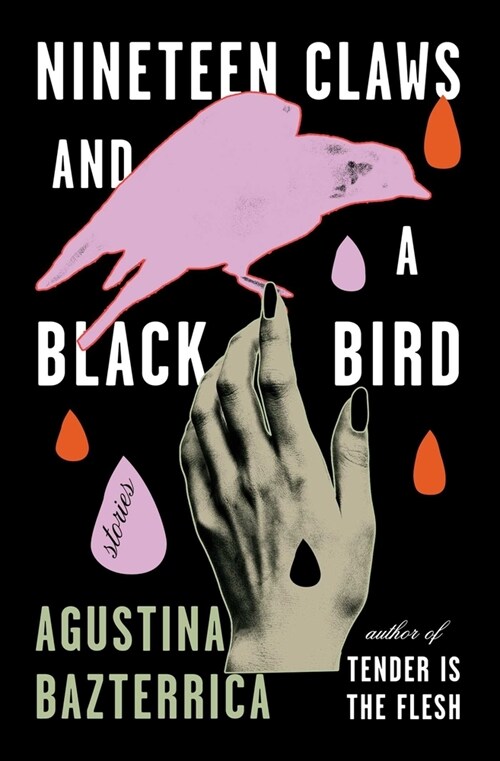
Nineteen Claws and a Black Bird
in a nutshell: Agustina Bazterrica's collection of short stories; some eerie and some horrific, some mundane but mystical, some ruthless but with a tender heart. All written with her delicate way of crushing you slowly.
main themes: the horrors of being a Woman; the mundane domestic kills slowly; devilishly delightful indulgences
the vibes: It's difficult to summarize a group of stories that don't necessarily have a common thread, but I would venture that these tales mostly concern intrusions into women's lives. Domestic, sexual, romantic, even a kind of violent mundanity. Some of the characters invite this themselves, like the woman who dubiously but surely determines that her taxi driver is actually a delicately aesthetic-obsessed serial killer and demands he take her, now, he knows where. Several experience gendered violence, at the hands of men and older women alike. The many ways women shape other women is also a recurring theme in the stories. There are a few stories with male narrators, even one starring an amorphous, monstrous blob of words spoken aloud inside a church. But ultimately the collection felt quite feminine to me, in at times delicious and also sad ways.
the writing: As far as I'm concerned, Bazterrica has never missed. Her English translator, Sarah Moses, deserves plenty of kudos as well. The range of environments, emotions, and voices across the stories didn't feel distant while reading them together, but as I think about them separately I recognize that Bazterrica had covered a wider swath than I realized.
Bazterrica's different narrators and their distinct voices really made this collection so vibrant. I adored the second-person opener, 'A Light, Swift, and Monstrous Sound' which tells of the strange morning when a neighbor's body slams into your balcony, disturbing your routine. "You thought you could hear his blood dirtying your tiles; you thought you understood the sound to be like the cold, a cold that's light, swift, and monstrous."
Or the woman in 'Candy Pink' who writes a list of steps to follow post-heartbreak: "Step One: Observe the tears falling on your fingers. Think of diamonds. Picture Elizabeth Taylor. Long for violet eyes and successive husbands. Mistake. Backtrack. You don't need more men in your life." all the way to the final step: "Feel that you're in the midst of chaos, in the midst of emotional, material, and concrete destruction. Look at the letter and exclaim I'm too young to die. Accept the fact this is an empty statement. Pick up the firearm. Smile with a certain excitement. Place the firearm against your right temple."
There is a woman who is determined to turn into a circle, a housemaid doing what she can for a slave, a young child whose misunderstanding of death becomes dangerous as she searches for a solution.

Beyond the opener, the biggest stand out for me was 'The Slowness of Pleasure,' in which a woman seated in a museum gallery staring at a painting of a woman seated in Charon's boat sensorially switch places through their breaths and mysteriously sentient environments, a languid and sensual experience that climaxes in the women becoming one, observer and object, waiting forever on the bench on the boat on the river to die. It made me revisit Jeanette Winterson's absolute banger of an essay, 'Art Objects' in which she describes the act of truly observing a work of art in sensual ways; as an act of surrender, openness, and intention. Winterson encourages viewers to expect to 'date' a painting, to choose your partner with great care and to sit with them for at minimum an hour, after which the painting is more likely to better understand its viewer than the viewer is the painting. "Who at the zoo has any sense of the lion?" Bazterrica seems to understand this.
But the absolute stunner, my favorite piece from this collection that I have not stopped pondering, is the 244-word long 'The Wolf's Breath.' This one has been living under my skin and is so perfect I am just going to share it here (please don't sue me, my net worth can be measured in Legos.)