
Jawbone
in a nutshell: The story follows a group of 6 teenaged friends from a rich private girls' school in Ecuador, who are led by a cunning and beautiful leader into evermore dangerous dares and violent 'games,' while building a dark theology in an abandoned building where they share horror stories, make one another bleed, and perform rituals to a drag queen White God of their creation. Among their victims of sly torture is a young new teacher, riddled with anxiety and PTSD from a violent attack at the hands of her former students, who dresses entirely in her dead mother's clothes and is slowly losing her mind (and the leader of the 6 girls is all too happy to help her along.) Mucho girlie violence ensues.
main themes: The danger of being a mother, the horror of being a daughter, the inextricable bonds between the two. The so-intense-it's-terrifying bonds of young female friendships, how deeply we love our girl friends and how many lines we cross for each other throughout the changes in our relationships.
the vibes: The cannibal cult of Yellowjackets but with the girls from Gossip Girl, who have a Heavenly Creatures kind of friendship in a We're All Going to the World's Fair type of game.
the writing: Absolutely terrific at ratcheting up tension, fear, and anxiety over the steadily growing horror throughout the chapters, while dropping clues for the perverse mysteries the characters are caught up in. At times more verse than prose, full of academic and pop culture references alike. In one scene three different narrative threads were woven through the pages simultaneously, creating a deeply eerie rhythm between dialogue from a dangerous party, one of the girls remembering a fucked up thing she did with her childhood friend, and a meta-narrative explanation of the history of viral creepypastas.
The book begins as a 15-yr-old girl wakes up on the floor of a dirty cabin in the jungle, realizing she is tied up and has been kidnapped by one of her teachers. From there, the mysteries and terror unravel and grow as Ojeda reveals the machinations of the girls' dark work. Some spoilery details follow, but this book is honestly best encountered with no preamble.
The Terror of Teenage Girls
''If we were bad girls, we are even more vile when we grow up.''
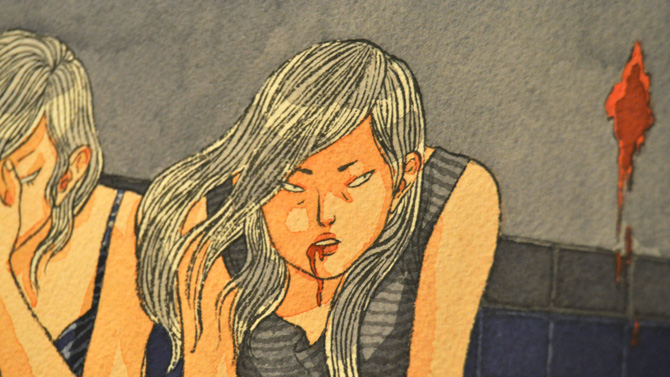
Teenage girls will forever fascinate me, those creatures in the middle of becoming what they need to survive in a world that hunts and mocks them. Being a teenage girl felt so intense and nebulous and dangerous and flighty. Scary. Fun. Like if you closed your eyes tight enough, there were no consequences.
So I am in love with Ojeda's chapter that takes the form of an essay dropped on the desk of the tortured teacher from the leader of the girls, Annalise. In it, she explains the origins of her White God, and why being a pubescent girl is being in 'the white age.' And what scares their teacher, Miss Clara, about them, why she recoils from the girls, is this whiteness. The total unknowablility of teenage girls as a 'white horror.'
"[F]earing an age that represents the void, a lack of definition, but also a great many possibilities, the potential to be, is similar to the experience of white horror. To you, we are puberty, nothing and everything... and that makes us vulnerable to a kind of possession."
This essay proves the final push Miss Clara needed to fully succumb to her inner terror, to be seduced into unwittingly doing Annalise's bidding, to teach Annalise's ex-BFF Fernanda a lesson "of the flesh."
When I pause to reflect on being a teenage girl, the immediate bodily response is an amalgamated rush of emotions and feelings at the edge of my skin. I was totally scared, sure, but I also felt scary; chastisement by the nuns at school made me feel akin to something slippery they were trying to contain. It was a simultaneous flush of wonderment that I could do seemingly anything, alongside the stumbling understanding of how many restraints my politicized body was growing into. The dual excitement and rage this generated did ferment a need to rebel, which was met with the frustrations of how to rebel, against what? Whom? Because, as I suspect Ojeda's girls know, there isn't a way to escape being a woman, becoming an adult. All of these warring, heightened emotions lead to definite strangeness, and desperate decisions.
"What happens when we see something white?" Annalise asked Fernanda without waiting for a response. "We know that it will be stained," she told her, smiling milkily.
"Why is the White God white?" Natalia asked right before telling her own horror story. "Because white is the perfect silence," Annalise responded with apparent solemnity. "And God is the horrible silence of everything."
The Cannibalism of Mothers with Daughters
"Her being a daughter, she understood with time, had led to the death of her mother-- everyone engenders their murderers, she thought, but only women give birth to them."
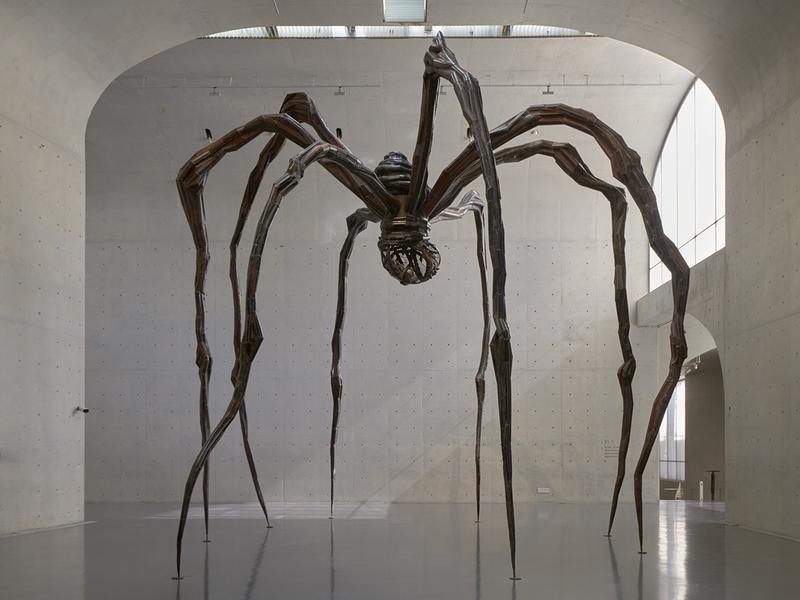
Fernanda's socialite mother is scared of her, will only speak sweetly to her in front of other mothers, and ignores her completely at home. "The nature of daughters, says the creed, is to jump on the mother... to take the place of the monster. - that is, the mother-God who initiated them into this word of desire. That's what a sister was: an ally against the origin." Having given up on her attempts to make her mother less fearful of her, Fernanda focuses her love and desire for reciprocal love entirely on Annalise, her twin soul, her blood sister, her best-friend-4ever-baby-never-change. But Annalise asks Fernanda to show her love in increasingly violent ways, and Fernanda can never say no to Annalise, even to her detriment.
"Why do they love them so much they would rather see them dead?"
Annalise's mother works tirelessly to instill fear in her, telling her stories of what happens to bad girls, slaps her, criticizes her endlessly without ever actually seeing her. In turn, Annalise tells stories about maternity and cannibalism that terrify the other girls and make "it difficult for them to drink milk at breakfast." Annalise is repeatedly described as beautiful, but when she speaks of beauty, it is only as a precursor to horror. She systematically seduces those around her into her machinations, not with her beauty, but by addressing their relation to horror. "Does it feel as though you are being stripped naked?" she asks, as she identifies and lays bare the fears needed to control those who listen to her. A method similar to her mother's constant warning tales of what happened to those bad girls, but in Annalise's stories, the victims never asked for it. She promises to show them how to fight it.
"Women do not make themselves, she thought. Women are made by their daughters and their mothers."
Miss Clara's mother is repulsed by her daughter's rabid "umbilical love," which only intensifies through the years as Miss Clara follows her mother's career path, takes her clothes, takes her house; craving a skinwalker's closeness that further repels her dying mother. She speaks to - and hears the voice of - her dead mother in her head constantly. Miss Clara never tried to embrace the white age's potentiality; she was laser-focused on becoming an exact replica of her mother from the time she was a little girl. Perhaps that is why she is so intensely horrified by the students she tries to teach- she does not understand this potentiality, to her they are Lovecraft's "unknowable."

"What's the only animal that's born from its daughter and gives birth to its mother?"
This riddle, repeated throughout the book, is answered by each girl differently.
"Poetry gives birth to the poetry that engenders it."
"Death breastfeeds the death that birthed it.
I can attest: loving a mother who has gone, is a haunting. (Even if you never loved her, never knew her, as a woman you will still be haunted by her. One can be shaped by an absence.) I was told for many years of my life how much I looked like a mini-me of my mother. Since she died it has broadly tapered off, though it was strongest right after she did (also when I was obviously going through the ravages of puberty, though during that time it felt akin to a promise- "when you make it to the other side of this Change, you'll still be pretty, like your mother.") I think about her daily and "talk" to her at least once a week (it used to be constant, but now we're both at ages I can't fully conceive of, can't imitate how we would converse in imagination) and have always considered it a haunting.
how did you change, were you surprised how you did? did you regret those changes? wish you changed more?
do we still look alike?
"What is the only animal that is born from its daughter and gives birth to its mother?" Miss Clara had asked Annalise a month ago. "God." Annalise responded immediately. "Because my God is a hysterical wandering womb."
Sometimes I wish I could return to the white age of terror and potentiality. Sometimes I wish the image I have of my mother could truly speak back. But reading 'Jawbone' felt like a very good alternative, a creepy and bewildering and dangerous and understanding space in which to visit and sit with such wishes and memories.