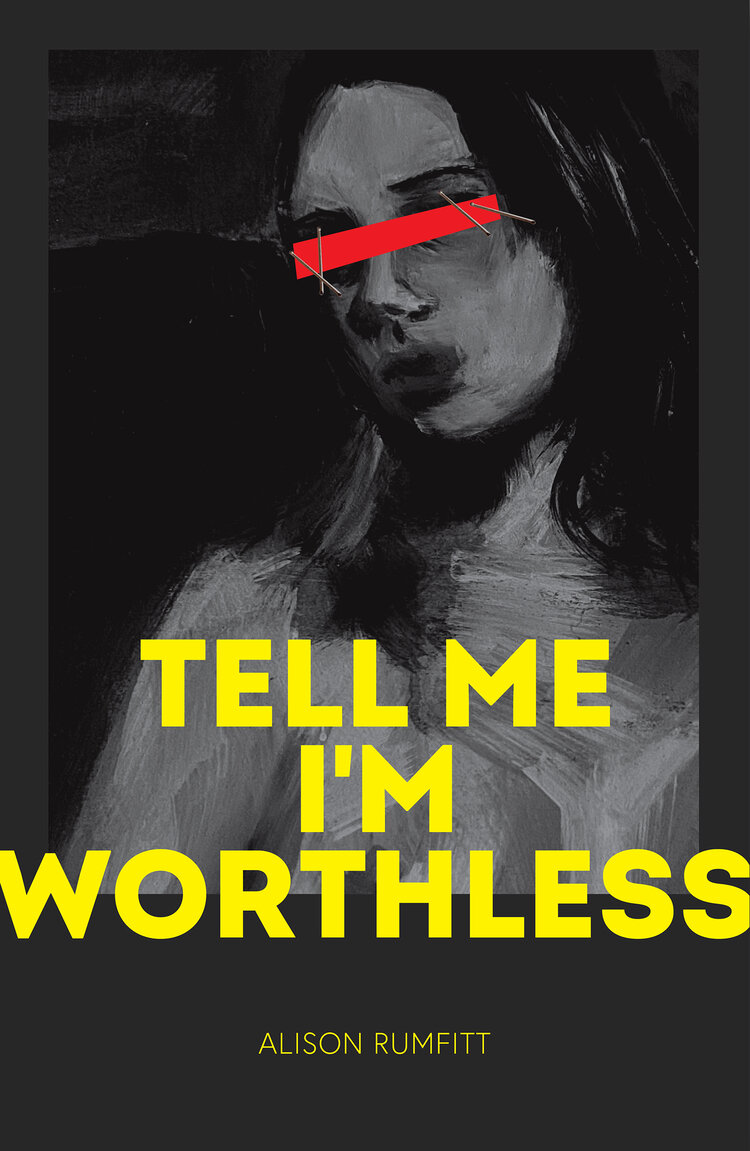
Tell Me I'm Worthless
content warning: never felt the need to make one of these but, fair amount of sexual violence in this one, though nothing egregious imo
in a nutshell: 3 besties go into a haunted house. 2 leave, dazed and drenched in blood. Years later, the 2 survivors- who don't know if they're still in love with each other or want to kill each other- are traumatized by that night in the house but can't agree on exactly what did happen. Both are certain they were violently raped by the other, and their bodies still bear the scars. One of the women, a cis lesbian, has become a small time darling of the UK's TERF movement. The other, a white trans woman, attempts to party away the pain. They are so haunted by the House and their trauma that despite their broken friendship, they convince one another that they must return. The House however has its own plans- has had its own plans- for as long as England has existed, and it is calling them back for a reason.
main themes: What is a Woman?; FASCISM (all caps); hauntology; Britain's racist history; antisemitism; emotional disconnect from our labor; what do we allow to define us when our allegiance to our morals is determined by the potential of harm; inhabiting bodies after sexual violence; everybody's complicity in all of it.
the vibes: a bit Haunting of Hill House but make it deeply British, Millennial, explicitly queer, and with the political fervor of an educated but underemployed 20something.
the writing: This was very much a mixed bag, I think due mainly to the grandiose themes Rumfitt was working with, and the range of literary subgenres throughout the chapters; both characteristics of the book I sincerely appreciated. The chapters alternate between the viewpoints of the three main characters Alice, Ila, and House, which allowed for different tones. Because it had such a wide playing field (ghost stories, dream sequences, fugue states, postmodern poetry of sorts, etc) some sections were amazing and others didn't quite get there. Also, the metaphors here are very heavy-handed, which the reader will either roll with or be turned off by, so that's another polarizing aspect. I thoroughly enjoyed myself but I am very homosexual and talk about dialectical materialism when on mushrooms so I'm just basic gay annoying. Others' mileage may vary.
SOLIDLY horrifying-- happy to report I had to turn on another light when reading the spookiest parts.
ALICE
"It would have been hard to continue to exist," I say carefully, "in the place we were and not break."
Alice is a white trans girl from a privileged background who makes sissy porn videos from her apartment for work and attempts to drown out her trauma by partying, while ignoring the growing ghostly intrusions into her waking life. A vibrant and very real character voice, like the narrator is sitting on the barstool next to you, leaning in close, speaking rapidly while chain-smoking and alternating wildly darting her eyes around the room and then holding you in intense eye contact.
Alice is so fucked up (from trauma and whatever she just took a bump of) that when she brings a girl home from a party and a ghost attacks her hook-up, she just kinda shrugs like "ghosts, man, what can you do?" and reminds the terrified girl to not forget her phone as she's running away from Alice's apartment. I had to laugh at that part.
Through Alice we experience the horror of a bifurcated mind: I love being a woman, I am proud to be trans, those who mind don't matter, etc. vs. everyone can see you're not a real woman you fucking brick sissy, they're all creeped out by you in the toilets. Her mind in general is a mess, through multiple compounded traumas and a heaping amount of self-hate. As a woman (though not trans) I felt a tenderness towards her for this, over her insistence to not show any tenderness towards herself. The self-policing, the constant worry that you aren't being a woman "the right way," either as a queer, as a feminist, with white or class privilege, etc. etc. and on and on forever... The internal dialogue is exhausting and maybe one of the best markers of what makes a Real Woman in the end. It is very much another type of haunting.
"Gender is as much about the air around you, the kind of place you are in, as how you look and act. And how you feel inside barely means anything at all, in the grand scheme of things."
Alice is also self-important, annoying, is shown multiple times to preserve her own safety over that of others', and to indulge in bits o' racism: "and she decides she only meant that as a joke. She decides this only after she has already thought it." A very real and relatable character to every potential reader, unfortunately, which is the point of the all-caps FASCISM theme: "Are you a bad person, or do you just have reasonable concerns? Are you a bad person, or are you just asking questions?"
ILA
"She does not possess herself; her traumas sometimes come and peer out of the windows of her eyes and that is very frightening. I can see you there."
Ila is a British-born lesbian of half Jewish and half Pakistani heritage, who has made an online name for herself as a TERF activist, following her traumatic sexual assault at the hands of her trans former best friend & fuckbuddy, during their excursion inside the House. If that sounds like a lot, well, it is. If Alice serves as Rumfitt's way to explore her whiteness, privilege, and trans identity, Ila serves as a punching bag embodiment of all of Britain's racist and antisemitic history, along with the internal self-hate and ideological violence of the TERF movement. (Criticisms of this book's heavy handedness are certainly not without merit.) Ila deals with self-harm, suicidal tendencies, and body dysmorphia brought on by her non-whiteness, her complex feelings towards gender, and the fact that ARBEIT MACHT FREL was literally carved into her skin (again, heavy-handed, yes, but with the tone of the book I think it's within reason.) Poor Ila, this girl cannot get out of her own way. A line from one of her chapters really encapsulates her: "Sometimes, at the end of everything, the only option you have is to make it worse."
While I acknowledge it's no surprise that I found myself relating to the part-Asian lesbian raised by immigrant family members who've experienced state violence, this instinctual allegiance allowed for self-examination, an act which was very in line with the book's purpose. Ila is embarrassed by a certain loudness of trans members of the LGBT family, and secondhand embarrassed by how they perform their femininity, and what they do (or are perceived to do) to the label of "woman." Gee, that is also, unfortunately, embarrassingly, relatable. I think all cis lesbians, all members of the various factions under the rainbow, have had these moments, can still catch ourselves having these moments, where we wish 'they' were just, not so much. Predominantly online, I can experience anything from embarrassment to genuine fury over what the "too online gays, the too young gays with no Real Life experience, the too isolated gays who only get to be gay in online spaces" are ranting about in public. I'm not proud of it but I have thought "perhaps we need to bring back bullying" when I see a take that is so divorced from lived reality that it could only exist in some fever-dream comment forum ideology. But what am I gonna do, comment "you are an ideological nightmare" to a badtake tweet from a user with a furry icon? To what end?? The fascists aren't going to differentiate between the demi-communist furry and me; I am also very annoying, just in a less public way. I shouldn't waste energy being mad at someone who is going to end up in the exact same gulag as me. Is that not the goal of the State, to make me waste energy hating on those who are my bretheren? And yet. It feels somehow humanly impossible to forgive Bad Takes.
HOUSE
"Sometimes the ghosts from old buildings stay around to see what comes next. Every spot on the planet has something in its past that is worth haunting about. Or if, miraculously, it does not, then there's always the future, which holds far worse for everyone. It haunts backwards. Things from the future, pushing back into the now because they are so utterly traumatic that they can't stay within the limits of time, they have to be happening now, around you. To you. There's a type of storm coming."
The House. The FASCISM House. The 'haunted house as nexus of the spirit of fascism' was definitely an interesting and novel idea that was explored with heavy hands, but ultimately I found it unique and intriguing enough to justify looking past any clunkiness. One thing I noticed from online discussions was that non-UK readers had a fair amount of British historical references go over their heads (myself included.) But the name of the house is Albion, which was the ancient name for Britain and the name of a mythical giant who founded the land of Britain in the poetry of William Blake. Albion (the House) is implied to be built upon the gravesite of Albion (the giant) and to be the modern embodiment of Albion the spirit, which is portrayed as the spirit of nationalism and therefore white supremacy, which as we all know equals fascism. You know what, whatever, I dig this premise.
Entering the House, one will hear promises of safety and stability, but become possessed by the violence which is needed to fulfill the promises. In fascist thought: my stability and safety must come at the cost of the safety and stability of others, but, England is for the English.
"Inside the room is the pain you know, outside the room is the pain you do not know."
This wicked math of what you want being in opposition to others' wants is something we all do, and it is a voice we learn from the myth of scarcity and the drives for national and personal identities. Does a trans woman existing take something from my existence as a woman? Does the immigrant get a job at the expense of a birthright citizen? Are these ugly thoughts? Yes. Do we all have them? Yes. In this way, the House retains its power through the centuries.
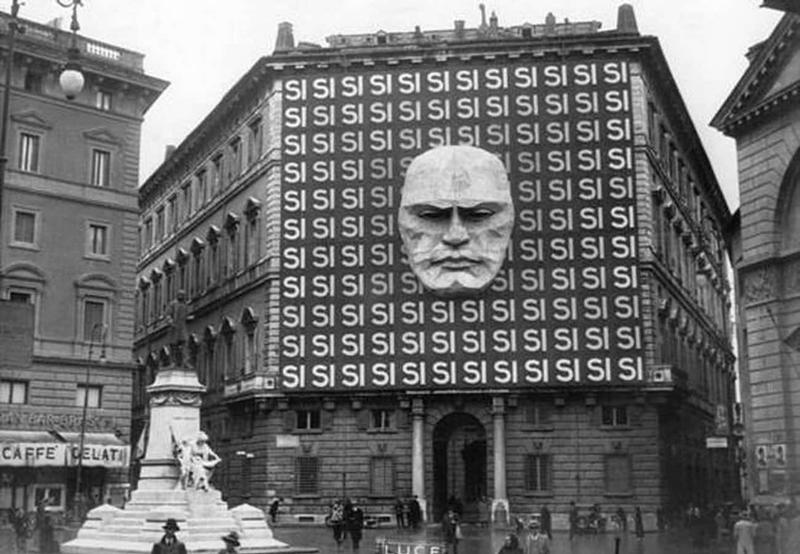
We are All in the House
"If you attend a fascist meeting, the meeting does not make you a fascist, you were always a fascist, just one in need of an outlet." Rumfitt clearly writes to encourage the basic understanding that we are all, living under this ideology, complicit in it. This does not come off in a patronizing or blaming manner to any reader who is familiar with leftist political theory, but I could imagine someone who gets their politics via social media could feel personally attacked. (Did I mention reviews for this book are very divided?) But, while this kind of personal confrontation is always uncomfortable, it is a necessary ritual, and I am glad to have had an opportunity to take myself through the House.
I found it clever that the House is never completed throughout its history due to horrific incidents which halt its construction phases: "My body is half formed a halfformedthing" like, every character even the House that is FASCISM is wrestling with body dysmorphia; not even FASCISM itself can truly be happy and content under its ideological demands. Alice wrestles with not being the right kind of trans, Ila can't see herself as a true woman because she can't live up to the ideal of 'woman' that she has in her head, and as a gay woman living under fascism I myself can absolutely relate to the relentless internal self-policing. Like Angela Davis famously says, "we must all of us kill the cop in our head." Fascism works because even outside of the House, we can hear its voice inside us, for despite our best efforts we speak its language. None of us will ever be a Real Woman because ultimately there is no such thing. But even if we understand that, it doesn't materially change our struggles with femininity, with personhood. I like that there is a line that can't easily be attributed to either Alice or Ila, but potentially both: "I sometimes think that what I want is really misogynistic." Girl, same.
Millennial Experiences with Hauntology
"I have to believe that was reality. I have to believe that is reality, and that this world is just a parody, a parody, a red room, a metaphor for a worse world."
None of these characters like their bodies, their work, their lives, their nation, not really. No one is actually content. It's a dissociative experience we are all having under our current socioeconomic and political realities.
I am fascinated by the frequency with which I come across the sentiment "this is the Worst Timeline" "we're in the darkest timeline, right?" "this is the stupidest timeline" in online discussions around politics and the news in general. I think it originates from Star Trek (?) but the idea was re-popularized by a famous episode of the show Community, in which 6 characters roll a die to determine a solution to the question "who is going to answer the door?" thereby splitting their current timeline into 6 potential timelines. Marvel "multiverse" stories have probably furthered the idea of alternate timelines in popular imagination, but Community originated the contemporary line of "this is the darkest timeline."
Rumfitt makes references to hauntology, and implies the internet, with its global context collapse, is making our collective hauntings of lost futures, or alternative timelines, even worse. I think she's absolutely right. American millennials aren't haunted by "the spectre of Marx" so much as the spectre of Bernie. Our collective generational movement-- for a pithy type of socialism that offered a much better American experience-- was summarily crushed by those we thought were supposed to represent us. Now, the spectre of literal nazis are haunting us everywhere we go, on and offline. There are almost no digital third spaces to escape to, and we can only seem to collectively lament that this is the darkest timeline. Our political imagination has no forward movement, we are dissociated from the body politic, stuck in this haunted loop of pining for the ghosts of political timelines that we can't make come to pass.
This is the part that truly terrifies me, not a literal haunted house that will carve up my face and twist my friend's body into horrific shapes. The fact that we are all in the dark, in the house, and we seem to either be turning on one another or giving up, sitting down in the hallway with bloody walls covered in swastikas and crude graffiti of severed dicks.
Not to get my own self in a doom loop, but, it is very hard to not give into the grief. The only hope I can cling to is that the forward movement has not materialized yet because it is going to come in shapes we haven't collectively imagined. Audre Lorde, again, is perennially correct: "The master's tools will never dismantle the master's house."
For her part, Rumfitt tries to add a ray of hope to the end of her tale, but honestly I was turned off by it. I wanted the ending to be as bloody as the entire experience had been. I thought it would feel "correct." But I understand that trans stories of all mediums so very rarely have anything resembling happy endings, so perhaps she didn't want to add to the pile. Fair enough. Any good tale of socialist realism will remind us that, yes, love is vitally necessary for any true revolution. But damn if I'm not going to definitely have nightmares of some teenaged incel planting a pipe bomb at a Pride march now, even if the main characters (me!) survive.